
 Castellano
  Català
  English
  BOOKSHOP
  OPTICS
  EQUIPMENT
  GARDEN NATURE
  REVISTA ORYX
 Pulsar Wildlife


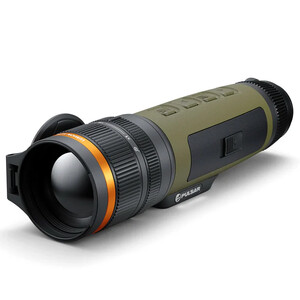
The renowned thermal imaging brand Pulsar has just launched its new Wildlife range, designed specifically for wildlife observation and optimised for birdwatching.
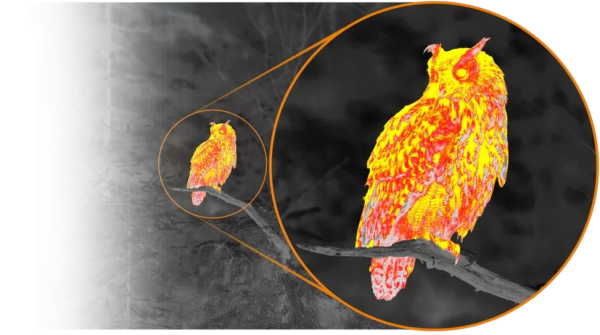
All nature lovers have, at some point, found themselves in situations where the conditions for observing an animal species are difficult, whether due to adverse weather conditions, such as low light or fog, or because visibility is poor, as can happen in a very dense forest or jungle. In these situations, no matter how well equipped you are with a good pair of binoculars or a telescope, it is difficult to spot a bird singing in the treetops or one moving through the dense ground cover. Fortunately, in recent years, thermal imaging devices have become a revolutionary solution for these situations, with a range of compact and highly versatile devices, and a variety of prices to suit all budgets and needs.
Improved algorithm
The products in this new Wildlife range achieve remarkable levels of accuracy in detecting wildlife, particularly birds. To achieve this, the firmware has been updated with an algorithm optimised for bird detection, which processes their thermal signature more efficiently. This advancement, combined with new colour palettes designed exclusively for these devices, improves contrast and makes it easier to identify the birds detected on the screen.
This improvement, together with state-of-the-art electronics and high-end optics, achieves extraordinary levels of sharpness and clarity for wildlife detection.
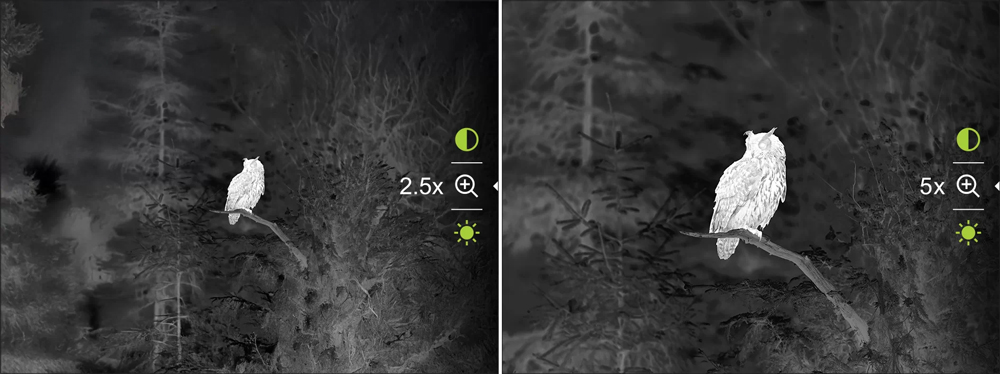 Comparison of the device’s sharpness at different magnifications (2.5x and 5x).
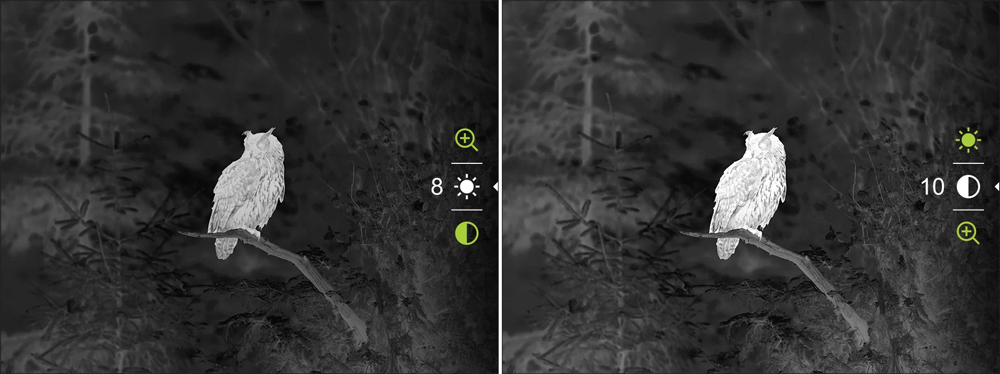 An example of how varying the contrast improves the sharpness of the subject.
Different sensitivity levels
These sensitivity settings and image processing algorithms facilitate rapid adaptation to changing weather conditions, improving the early detection of wildlife in constantly evolving scenarios.
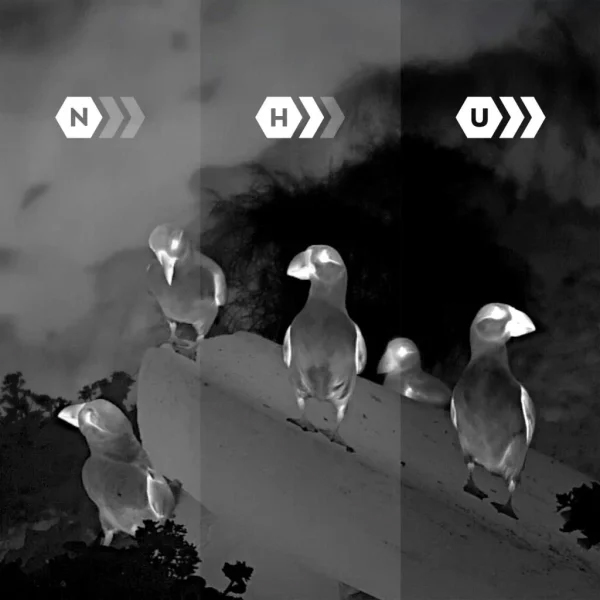
sNETD
The sNETD is a measure of the smallest temperature difference that the entire system is capable of detecting, taking into account the thermal sensor, the device’s optics and software processing. In other words, whilst NETD is the basic measure of the sensor’s thermal sensitivity without any processing, sNETD reflects real-world performance, as it combines the sensor’s NETD with advanced image processing and electronic optimisation. The result is a much more representative measure of what the user will see in real-world conditions, particularly in fog, rain or low thermal contrast.
Redesign of the devices
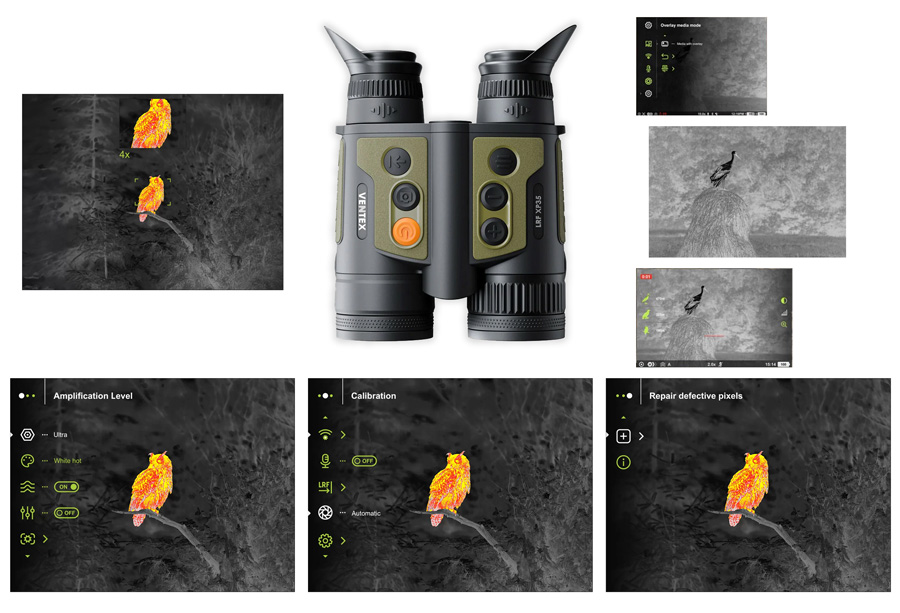
- White Hot, Black Hot and Red Hot are ideal for object detection
- Rainbow and Ultramarine help to improve recognition and identification
- G¡reen, Sepia, Red Monochrome and Violet are best suited for extended night-time observations
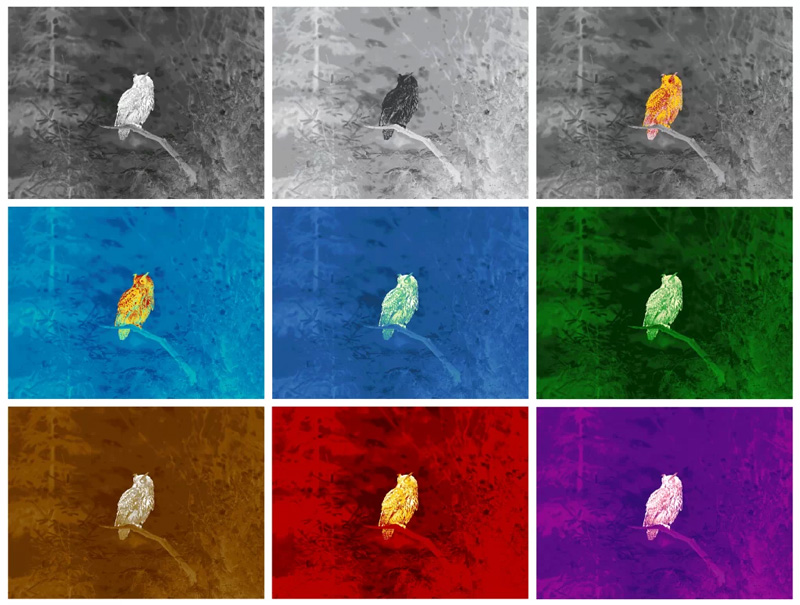 View of the 9 colour palettes arranged according to the list above
Discover all the devices in the range
Pulsar ALARIS XQ30 PRO
The ALARIS XQ30 PRO is the most compact and powerful thermal monocular in the Pulsar Wildlife range. It offers excellent thermal performance, with exceptional sensitivity thanks to its sNETD of <20 mK, ensuring clear and accurate detection even in the most adverse weather conditions.
Its ultra-compact design means it can be easily stored, even in a pocket or a binocular case, making it the ideal companion for outings or trips, complementing binoculars without adding much bulk or weight.
Despite its compact size, the ALARIS XQ30 PRO is constructed from a durable magnesium alloy, built to withstand adverse weather conditions, extreme temperatures and intensive use, all without compromising on reliability or performance.
VISOR TÉRMICO MONOCULAR 2X PULSAR WILDLIFE ALARIS XQ30 PRO CON REGISTRO DE IMÁGENES Y CONEXIÓN WI-FI

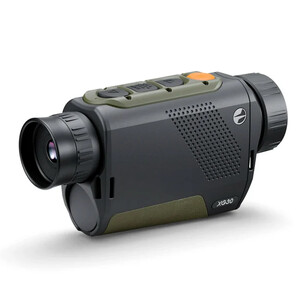
Pulsar ORNI XG35
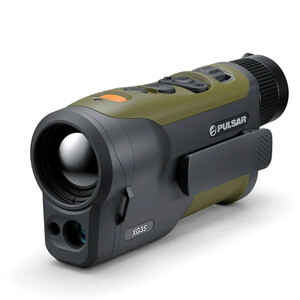
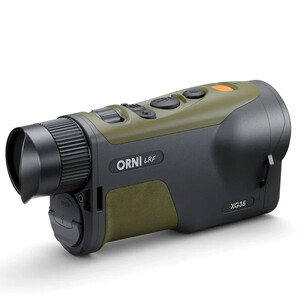
The ORNI XG35 is an ultra-compact thermal monocular that combines lightness and power to deliver high-end performance. Its highly sensitive 640 x 480-pixel thermal sensor, with an sNETD of less than 20 mk and a 35 mm f/1.0 lens, provides an extraordinary level of detail, enabling the detection and identification of wildlife at a distance of up to 1,800 metres. With a wide 12.5° field of view, a 2.5–20x magnification range and 8x digital zoom, it is ideal for both rapid scanning and precise identification.
Its design is optimised for one-handed use, featuring a front focus wheel, ergonomic buttons and an ambidextrous strap, as well as haptic feedback that confirms each action by touch alone. A device designed to offer maximum comfort and efficiency on any field trip.
Pulsar VENTEX XP35
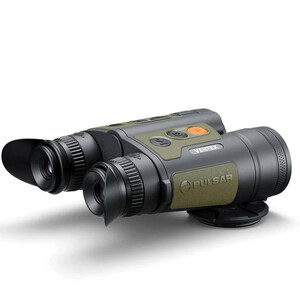
The VENTEX XP35 is the most compact thermal binoculars in the range, yet it delivers exceptional performance thanks to its 640 x 480-pixel Lynred thermal sensor, manufactured in Europe, with 17 µm pixels and <18 µK sNETD, offering extraordinary sensitivity and excellent identification capabilities, revealing both the most relevant anatomical details of animals and the textures of the landscape.
Despite their compact size, they offer a very wide field of view and a detection range of up to 1,350 metres, even in adverse weather conditions. Image stabilisation, combined with a design intended for comfortable, prolonged observation, combines portability and power to deliver a professional experience on any outing into the countryside.

Pulsar LUMION XL50
The LUMION XL50 is the brand’s top-of-the-range thermal monocular, designed to deliver exceptional thermal clarity and impressive detection capabilities. Its ergonomic design with a rubberised housing ensures comfort and durability even during intensive use, whilst the zoom and focus rings on the lens provide a smooth and intuitive experience, similar to that of a traditional camera.
Equipped with a large-format HD thermal sensor featuring 1024 x 768 pixels, 12 µm and <40 NETD, the LUMION XL50 delivers sharp images across its entire 2.5–20x magnification range and achieves an impressive detection range of up to 2,300 metres, establishing itself as a professional tool for naturalists seeking maximum performance in any situation.